By the Nova Linea Musica Team
On October 28, 2026, Nova Linea Musica marked Philip Glass's ninetieth birthday with a sold-out concert, "Philip Glass at 90: A Celebration," at 11 E Adams. The program gathered Glass's solo and chamber music alongside a world premiere written for the occasion.
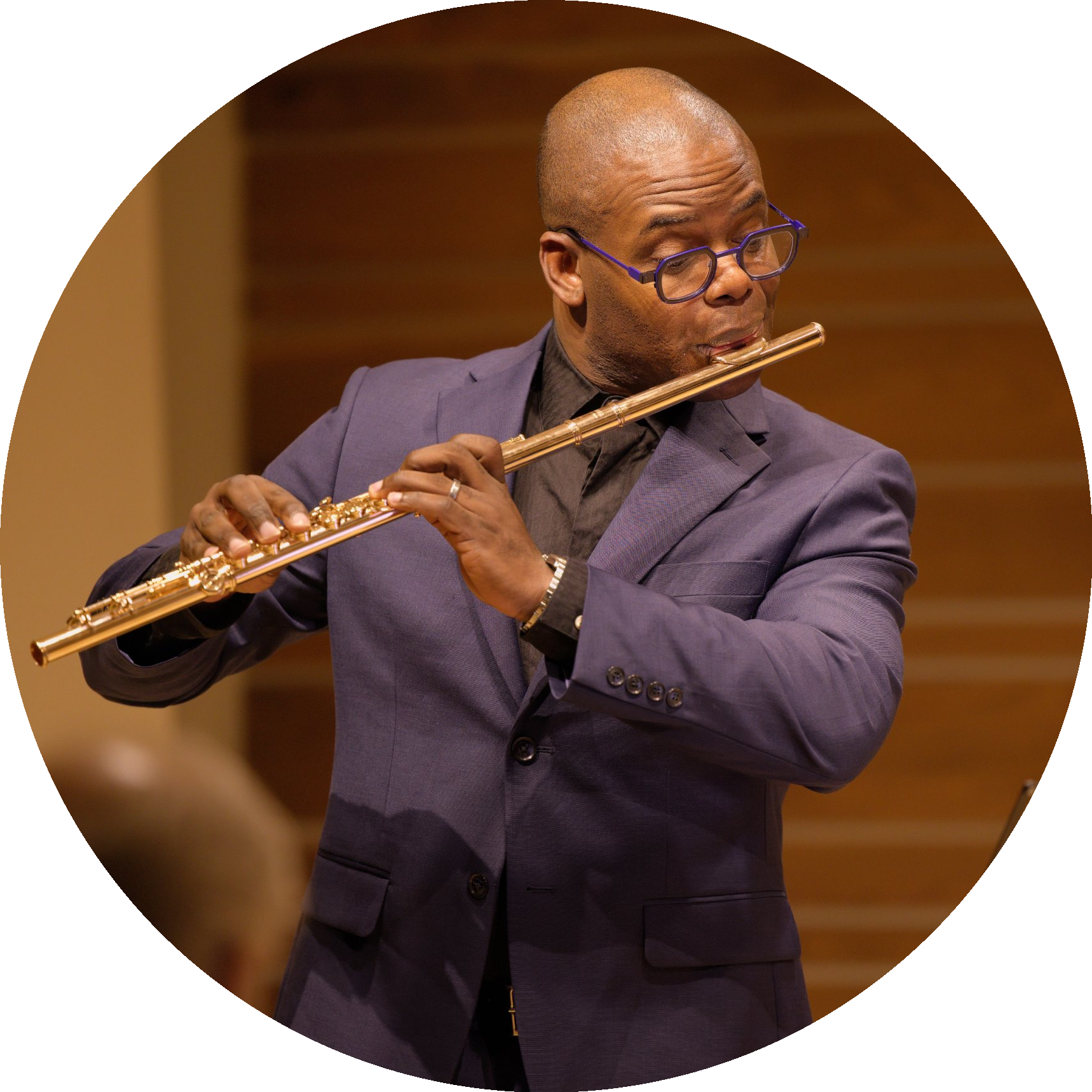
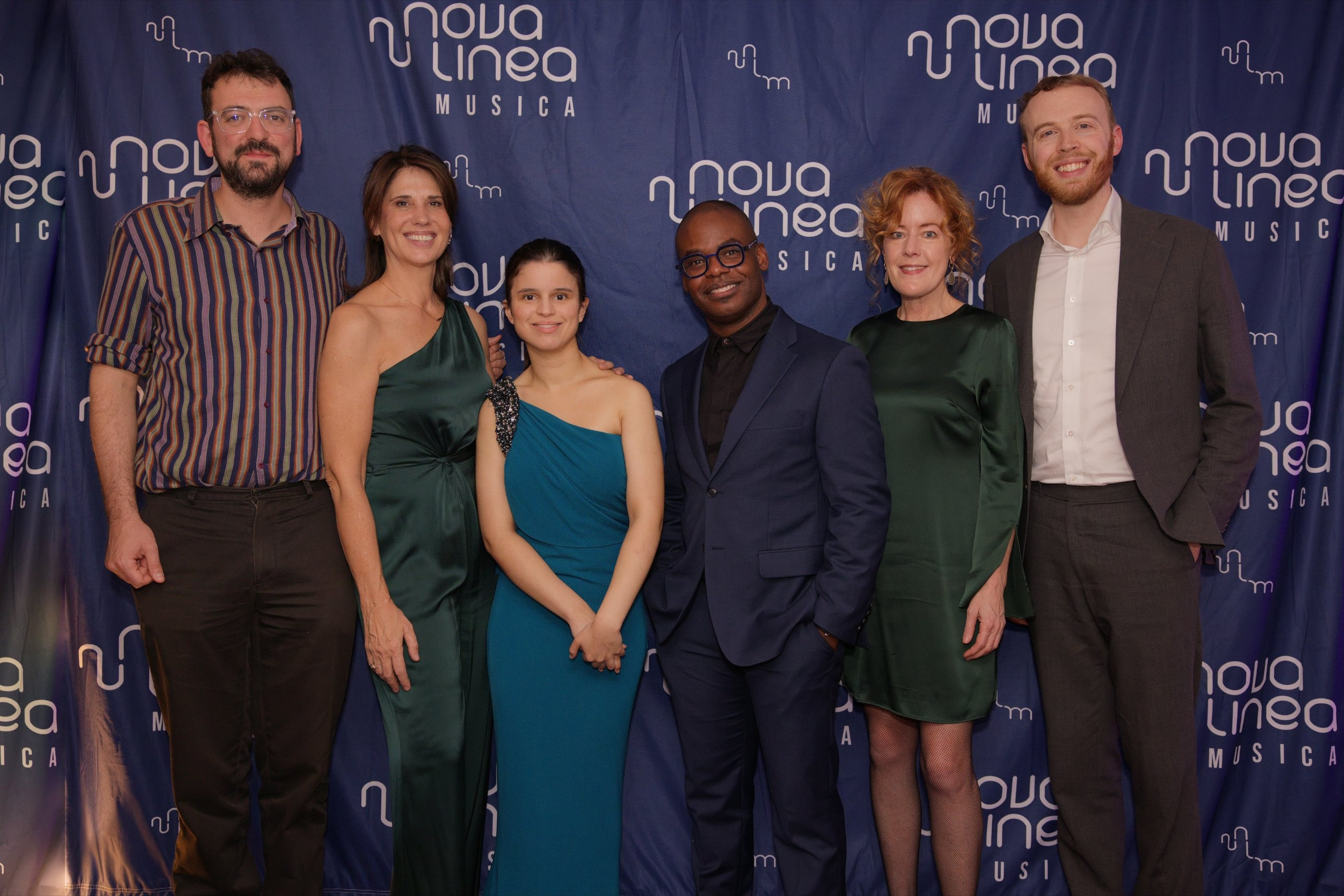
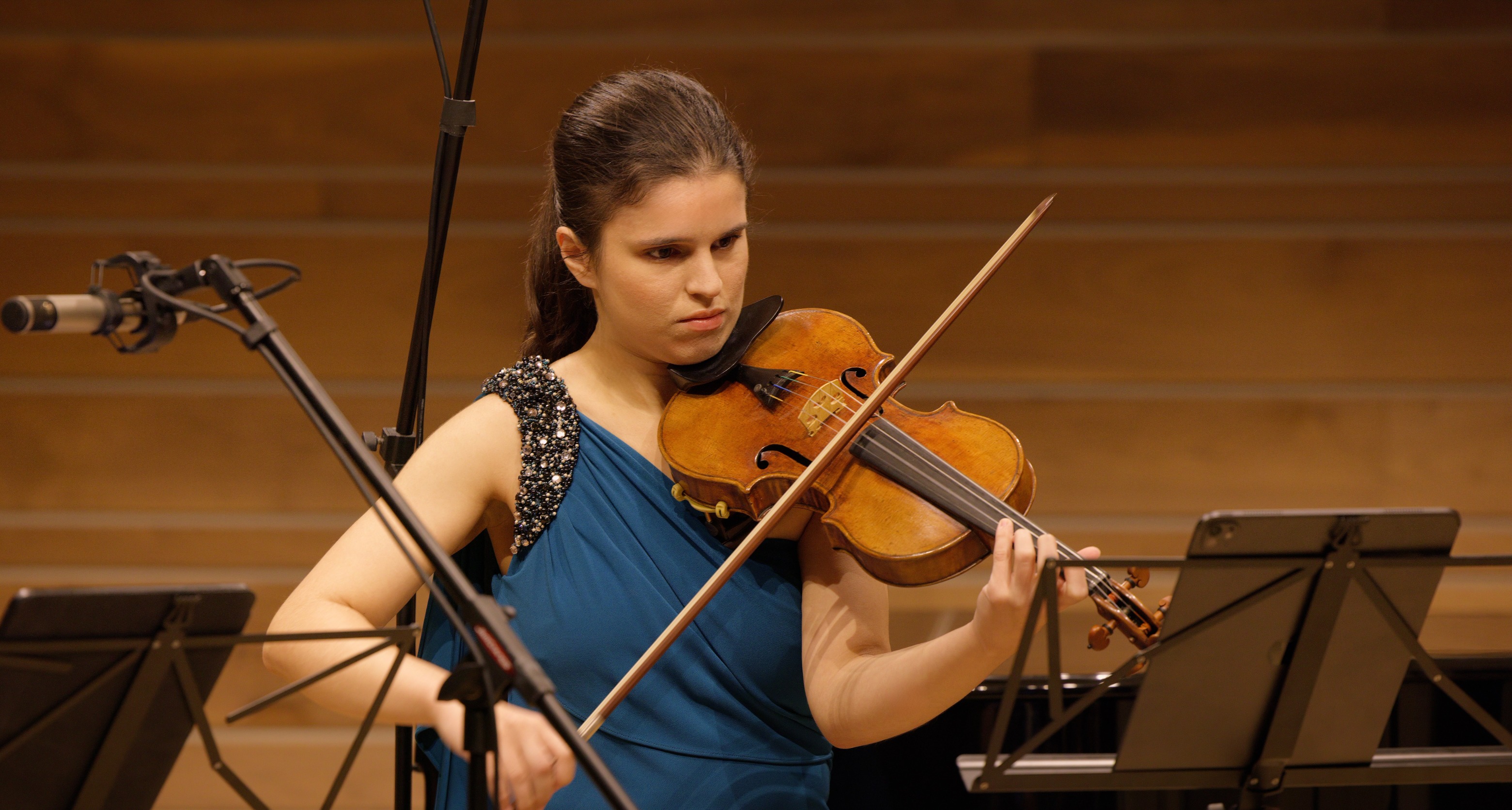
The evening brought together violinist Desirée Ruhstrat, cellist Wendy Sutter, flutist Demarre McGill, and violinist Rabia Brooke, with collaborative pianist Nathanael Canfield. At its center was Through Philip and Lou, a new work by Alex Weston, commissioned by Nova Linea Musica.
After the final note, the musicians stayed on stage for a conversation led by the commissioned composer, Alex Weston, followed by a reception. What the audience heard there was as memorable as the music: two very different ways of living inside Glass's sound world.
Alex Weston came to the commission from an unusual vantage point. He spent years as Philip Glass's assistant, and his new piece threads together two touchstones: Glass himself and Lou Reed's "Perfect Day."
Weston described taking the long, elegiac melody of "Perfect Day" and distilling it down to a small, workable cell, so the piece could travel through many iterations rather than simply restate the song. He set that material over a sustained pedal tone of G, the kind of simplicity he returns to often in his own writing.
From Glass, he borrowed the logic of rhythmic augmentation, handing the line off between the instruments so the parts accumulate gradually. His goal, he said, was to have them come together like a Swiss clock, an effect he admires in Glass and is still chasing.

Much of the conversation circled a paradox anyone who has heard Glass will recognize: the simplicity of his music is deeply complicated. Newcomers, Weston noted, often hear only repetition. He recalled the affectionate joke he fielded for years, that his job must be nothing more than copy and paste.

That joke, he suggested, is a good way to spot someone who has not yet learned to listen closely. What sounds repetitive is really a set of rules. Glass introduces a simple idea, then changes a single note, or a single eighth note, and lets the alterations accumulate.
Because the ear has settled into the pattern, each small change lands with surprising force. A Glass piece is not long because it repeats, Weston said. It is long because that is exactly how long it needs to be. Break the pattern, and the effect falls apart.
The conversation also turned to the program's solo works. Weston pointed to those pieces, among them Glass's Partita for solo violin, performed by Rabia Brooke, as music that sets aside his familiar repeating cells yet still sounds unmistakably like him. He asked the performers how they approach Glass when he steps outside his own mold.
If Weston spoke to the architecture of Glass's music, cellist Wendy Sutter spoke to its freedom. She described challenging the composer to write outside his familiar territory, and a collaboration that felt almost Baroque in spirit. Glass offered motives, and she expanded and ornamented them, choosing how often to repeat a phrase much as a performer of Bach might.

That spirit produced "Songs and Poems," a work so unlike his signature style that it surprised even her when she first heard the master recording. She recalled worrying over how it would be received. Many listeners, it turned out, loved it precisely because they did not recognize it as Glass. She even remembered startling her engineer by refusing a click track, insisting instead on capturing the movements in a couple of free takes.
She offered the story as proof that Glass, then in his late sixties, remained willing to change, opening the door to a wealth of later music. The lesson she drew was about performance as much as composition. Play this string writing mechanically, she said, and you miss the point entirely.
The pairing of cello, flute, and violin is uncommon, and genuinely difficult to write for. Desirée Ruhstrat explained that the choice was deliberate. Demarre McGill was invited not only because he is a superb flutist, but because Glass himself was a flutist. Building the program around the composer's own instrument felt true to the spirit of the celebration, and opened repertoire that is not often heard.
That instinct, gathering established and emerging artists around a living composer's work, sits at the heart of Nova Linea Musica. Every concert this season carries a new commission, and "Through Philip and Lou" now joins that growing catalog. The celebration of Glass at 90 was both a tribute to one of the era's defining voices and a reminder of why new music keeps the old feeling alive.
The season continues at 11 E Adams on November 18 with the Poiesis Quartet and a new work by Iván Enrique Rodríguez. We hope you will join us.
Photography: SnoStudios · Audio: Chris Willis

