
Philip Glass's music is everywhere. It turns up in concert halls and opera houses, in film soundtracks and in collaborations with artists from David Bowie to Allen Ginsberg. His musical language has become so recognizable that it can sometimes be difficult to hear past it. As Glass approaches his 90th birthday in January, the anniversary is a good excuse to spend time with a composer whose music has become part of the American cultural landscape.
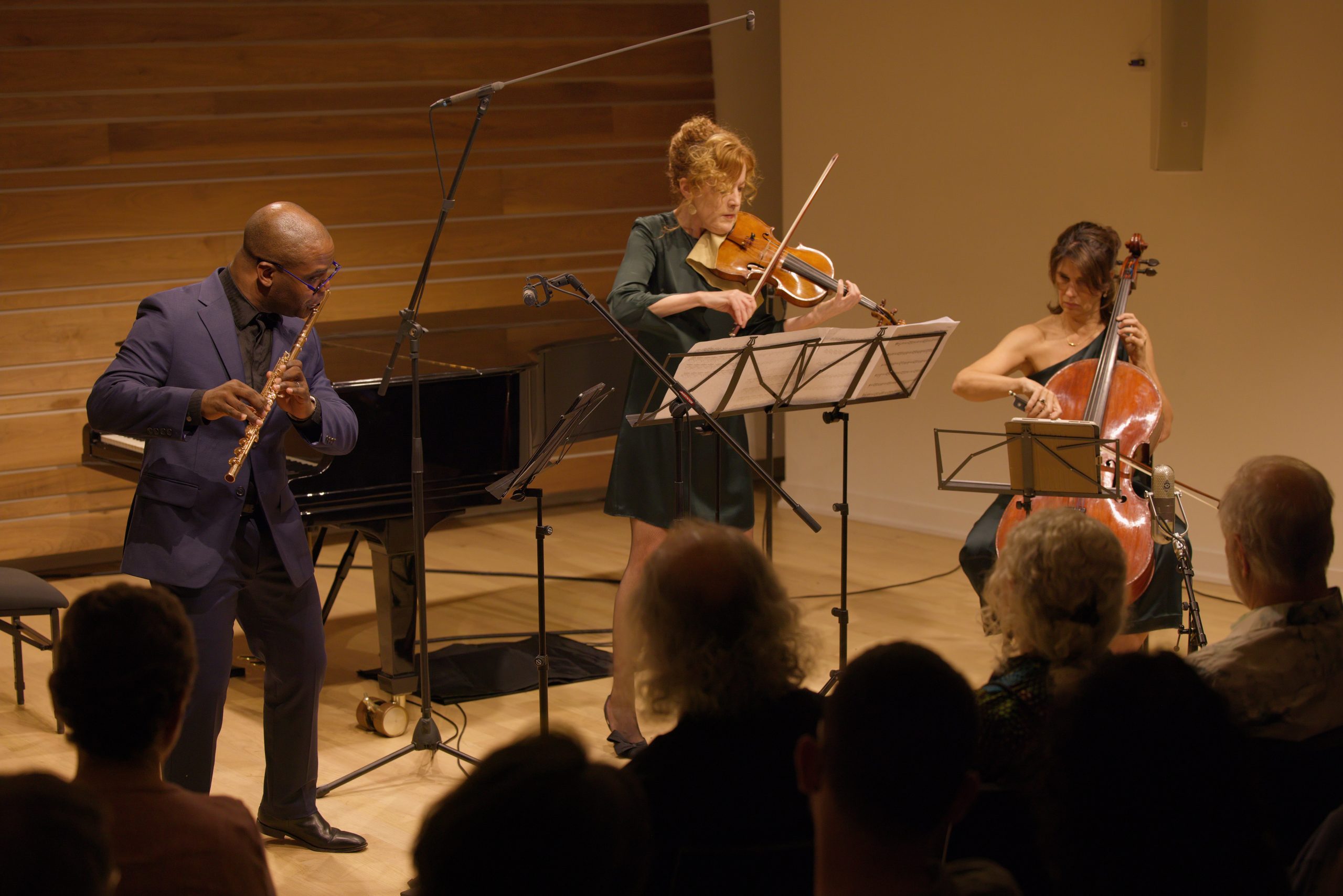
Nova Linea Musica took an interesting approach to the occasion. Rather than attempt a survey of Glass's enormous output, the Chicago series assembled a program of chamber works featuring flute, violin, cello and piano. Demarre McGill, Wendy Sutter, Desirée Ruhstrat, Rabia Brooke and Nathanael Canfield performed in various combinations and as soloists. The result was a varied evening, even if the sheer amount of Glass's music on offer occasionally threatened to overwhelm the listener.
Glass, along with Steve Reich, Terry Riley and others, redirected American classical music in the second half of the 20th century, offering an alternative to the often forbidding language of postwar modernism. Simple patterns, repeated and gradually altered, replaced the impulse toward ever greater complexity. Glass became the most recognizable face of the movement, and his music has always had a more pronounced lyrical side than that of many of his contemporaries.
That lyrical quality was the most persuasive aspect of Nova Linea Musica's program. Glass's music is often described in terms of its repetitive structures and hypnotic effects. But there is also a considerable sensitivity to the instruments for which he writes. The evening made that apparent.
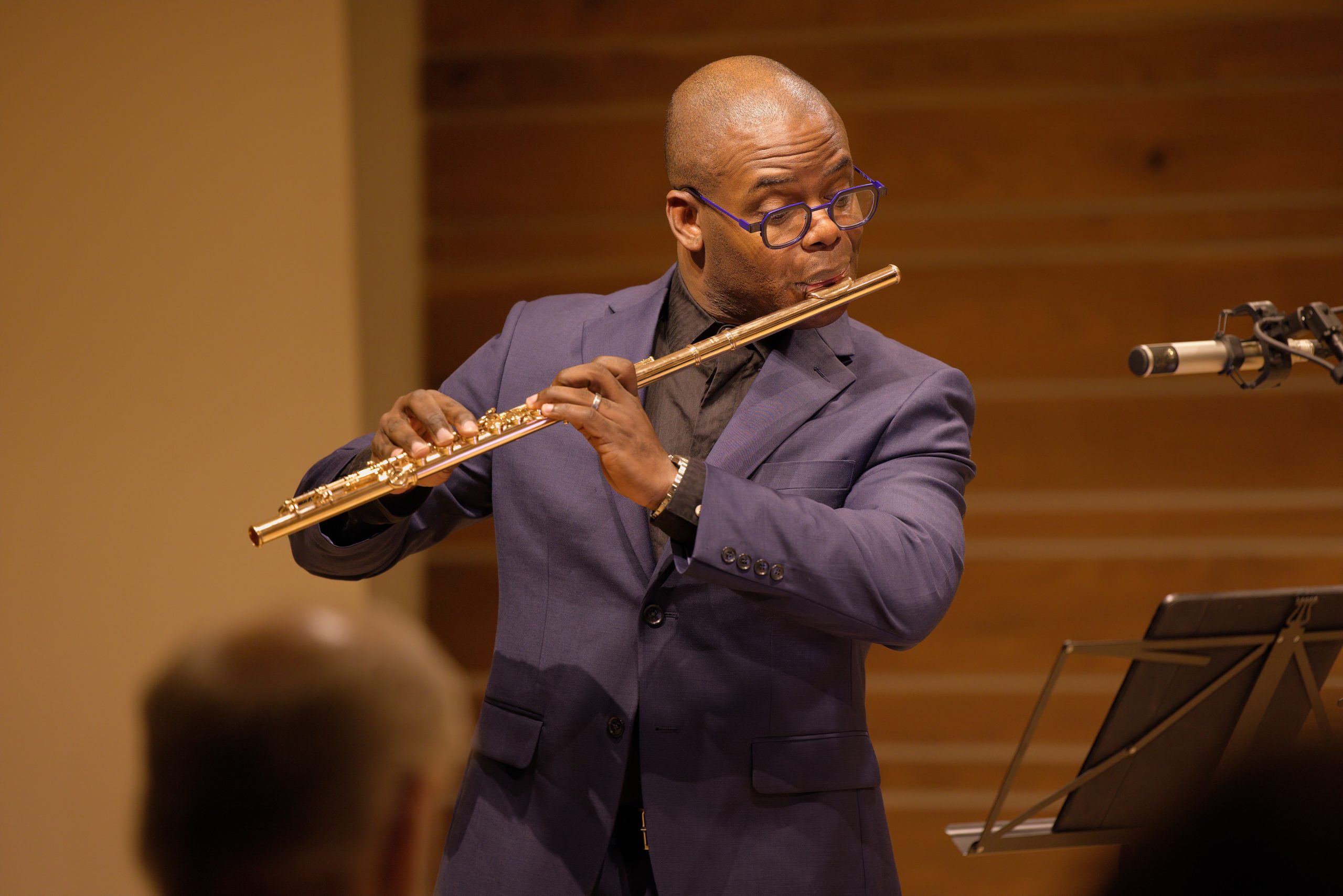
McGill opened with Arabesque in Memoriam, immediately demonstrating how well Glass understands the flute. The music’s twisting, recurring lines are technically demanding, but McGill made them sound almost effortless. His breath control and facility were impressive, particularly in the intimate setting of Guarneri Hall. The flute’s light, airy character was never lost, even as the music gathered momentum. Glass studied the instrument as a child, and these works suggest he never quite left it behind. McGill returned for Love Divided By and the third movement of Taoist Sacred Dance, both for flute and piano. In Love Divided By, he brought an ethereal lightness to the recurring lines, which seemed to float in and out of focus.
Sutter brought a different sensibility to three movements from Songs and Poems, a suite Glass wrote specifically for the cellist. Sutter has recorded the work and clearly feels a strong connection to it. Introducing the piece, she described its character as “sad Bach,” which seemed about right. There is something of Bach’s formal persistence in the music, though its expressive language is unmistakably Glass's own.
Sutter gave the first movement an obsessive intensity without sacrificing its warmth. The third was shorter and more nervous, putting her dexterity to the test. The fifth, which runs about six minutes, was the most affecting. Sutter sustained its long lines with remarkable concentration, drawing out a depth of feeling that the music’s repeated figures might initially seem to resist. Her cello had a resonant, enveloping quality that suited the work especially well.
The violin got its turn, too. Ruhstrat and Sutter played Glass's Duos Nos. 1 and 2 for violin and cello, while Brooke performed three movements from the Partita for Solo Violin. Both performances showed off the instrument’s capacity for lyrical expression, though the Partita also gave Brooke room to display its more athletic side. The changing combinations helped keep the evening moving. Still, there were moments when Glass's musical language began to feel a little too familiar. The patterns shifted and the harmonies changed, but the underlying approach remained much the same.
Subscribe to Third Coast Review’s weekly highlights for the latest and best in arts and culture around the city. In your inbox every Friday afternoon.
Enter your email address
The evening’s most significant departure came with the world premiere of Through Philip and Lou, a new work by Alex Weston commissioned by Nova Linea Musica. Weston, who has worked with Glass, took as his starting point the composer’s friendship with Lou Reed and the question of what Glass might have heard in Reed’s song “Perfect Day.” The result was, in Weston’s telling, an imagined conversation between two artists.
Weston has Glass's easy way with a tune, but his writing is more texturally complicated. The trio of flute, violin and cello builds Glassian phrases, repeats them and then lets McGill, Ruhstrat and Sutter break away for brief solos. The piece acknowledges Glass's musical vernacular without becoming trapped by it. It was an appealing demonstration of how an influence can be absorbed and then taken somewhere else. The audience was told that the new work had run longer than expected, leaving no time for Milhaud’s scheduled Sonatina for Violin and Cello. I didn’t mind.
A recital devoted to Glass is hard to pull off. His output is vast, but his musical language is so consistent that a long program can feel less varied than it looks on paper. Nova Linea Musica mostly sidestepped the problem by building the evening around the instruments and the players. It also served as a reminder that Glass is more than repetition. There are melodies here, and some are extraordinarily beautiful.
Information about Nova Linea Musica's 2026-27 season, including details on the Poiesis Quartet’s November 18 recital can be found here.

