
Louis Harris / January 23, 2026 / Third Coast Review
Nova Linea Musica continued its mission to create, present, and promote new music in an innovative and enjoyable fashion at Guarneri Hall on Wednesday evening. In a program entitled Threads of Melodic Silence, resident artists the NLM Trio and cellist Alexander Hersh performed six contemporary works, including a world premiere.
In addition to bringing composers and performers together, NLM operates out of the intimate Guarneri Hall, a compact, 60-seat venue on the third floor of the office building at 11 E. Adams in the Loop. Before each performance, the artists and composers discuss and explain the evening’s program. Afterward, everyone is invited to drinks and a meal down the hall, which allows the audience to mingle with the performers and composers. This is very reminiscent of the way people used to play music with friends in the parlor 250 years ago. It is an intimate and lovely experience.

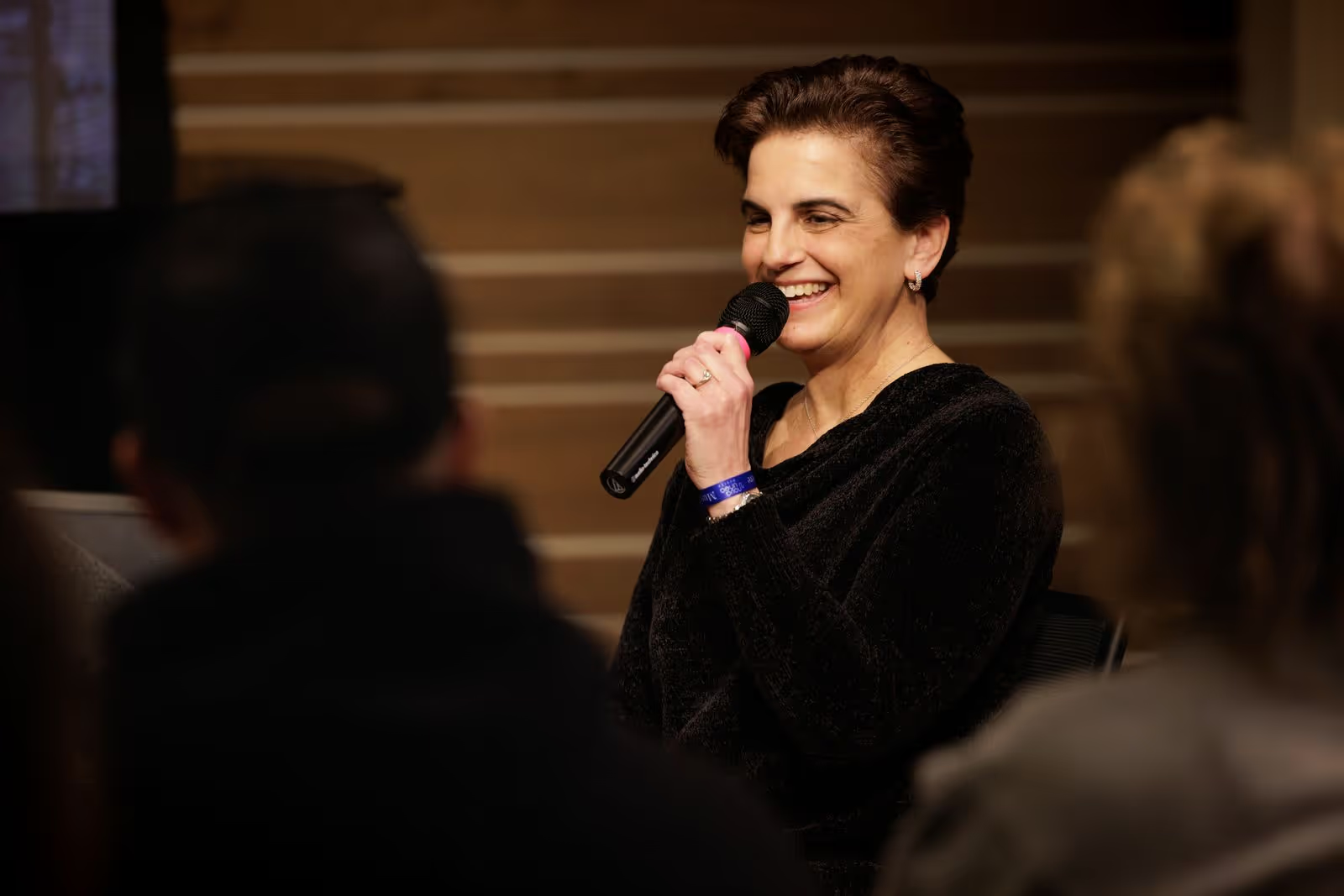
The first half of the concert featured cellist Alexander Hersh playing new works for solo cello and, with NLM pianist Tamila Salimjanova, a cello and piano duo. With a very perky stage presence and avuncular facial features, Hersh is always enjoyable to hear. Before each piece, he described his interactions with the composers and why these composers warrant attention. He did so with a charming, sometimes tongue-in-cheek effect that drew the audience in. His cello technique is lovely; he is able to produce pure tones and raspy textures. This young performer and composer has a very bright future.
The first piece was very much in keeping with the concert’s Threads of Melodic Silence theme. Daniel Pesca wrote In Solitude for solo cello while in isolation during the pandemic. It starts quietly with a lengthy, melodic motif that gets manipulated as the piece progresses. The contrasts within the work were striking, with moments of quiet reflection and, as Hersh suggested, of “yelling into the void.” it ends very quietly on the highest notes, almost mid melody. As Hersh described, it is hard to tell if it is “giving in or giving up.”
Up next was Clairo for solo cello, which Hersh wrote with a format he had requested of other composers whose works were commissioned for solo cello: to be heard on a different planet, with different gravitational and other characteristics from earth. It opens quietly, with doubled stopped strings forming chords when they’re shifted. When he played it for his mother, her response was that it reminded her of Debussy mixed with the Beatles. I heard Beethoven’s “Ode to Joy.” It was lovely, if a bit too short.
Salimjanova joined Hersh for Petrus for cello and piano by Marc Neikrug. Hersh offered a lengthy description of the important contributions Neikrug’s cello-playing parents made performing for Hollywood films in studio orchestras. He also described the conversation he had with Neikrug, which is when he became aware of the existence of Petrus. It had only been performed once when it was written in 2001.
Hersh had asked him if it was any good, and Neikrug said that it was. I, however, did not enjoy it. It has lots of deep chords and very little melody on the piano and rapid cello passages played ponticello near the bridge, which creates a scratchy sound. It sounded very disjointed rhythmically and it did not seem to go anywhere.
The resident NLM Trio Rabia Brooke on violin, Haddon Kay on cello, and Tamila Salimdjanova on piano entered the stage for Lera Auerbach’s Trio No. 1, Op. 28. As the notes point out, this three-movement work was written in the early-mid 1990s, as Auerbach was leaving the collapsing Soviet Union for the United States.
The opening Prelude is a fun romp, starting on the piano. The strings soon join playing in scratchy ponticello style. The piano soon moves into a sad Andante lamentoso with a soulful theme. The presto finale sounds like a driving machine. The intense performance created a very enjoyable effect.
Up next was the world premiere of Stacy Garrop’s Under the shimmering aspens for piano trio. The shimmering effects started on the violin, with the cello joining. The piano backed things up, but eventually, the piano slowly plays a melody with the violin and cello providing sound effects with quick strokes with their bows. Ensemble interaction was quite effective, although there were moments when the piano could have been a bit louder.
A Chicago-based composer, Garrop has written many awesome works over the past few years. Most notable is her oratorio, Terra Nostra. During the Ear Taxi Festival last October, her piano concerto Invictus received a world premiere; a recording on Cedille Records is expected soon.
The concert ended with Jennifer Higdon’s Piano Trio No. 1. Of contemporary composers, Higdon has risen to prominence, with her works regularly performed in orchestral and chamber music settings. This trio in two movements shows why. The slow first movement, “Pale Yellow,” features quiet, sumptuous sounds from the violin and cello, as the piano offers backup. In her notes, Higdon describes it as “luminous and serene,” which is exactly what NLM Trio produced. The second movement “Fiery Red” is loud and rapid, very much overwhelming. Even in this frenetic soundscape, there were times of contrasting intensity. The very end was loud flurry on the three instruments.
Nova Linea Musica continues their series with Third Coast Percussion presenting The Drum Also Sings. Since TCP requires a stage larger than the entire footprint of Guarneri Hall, the concert will take place at Gottlieb Hall in the Merit School of Music. Wednesday, February 25, 6:30. For more information, click here.
Support arts and culture journalism today. This work doesn't happen without your support. Contribute today and ensure we can continue to share the latest reviews, essays, and previews of the most anticipated arts and culture events across the city.

