Meet the Performers
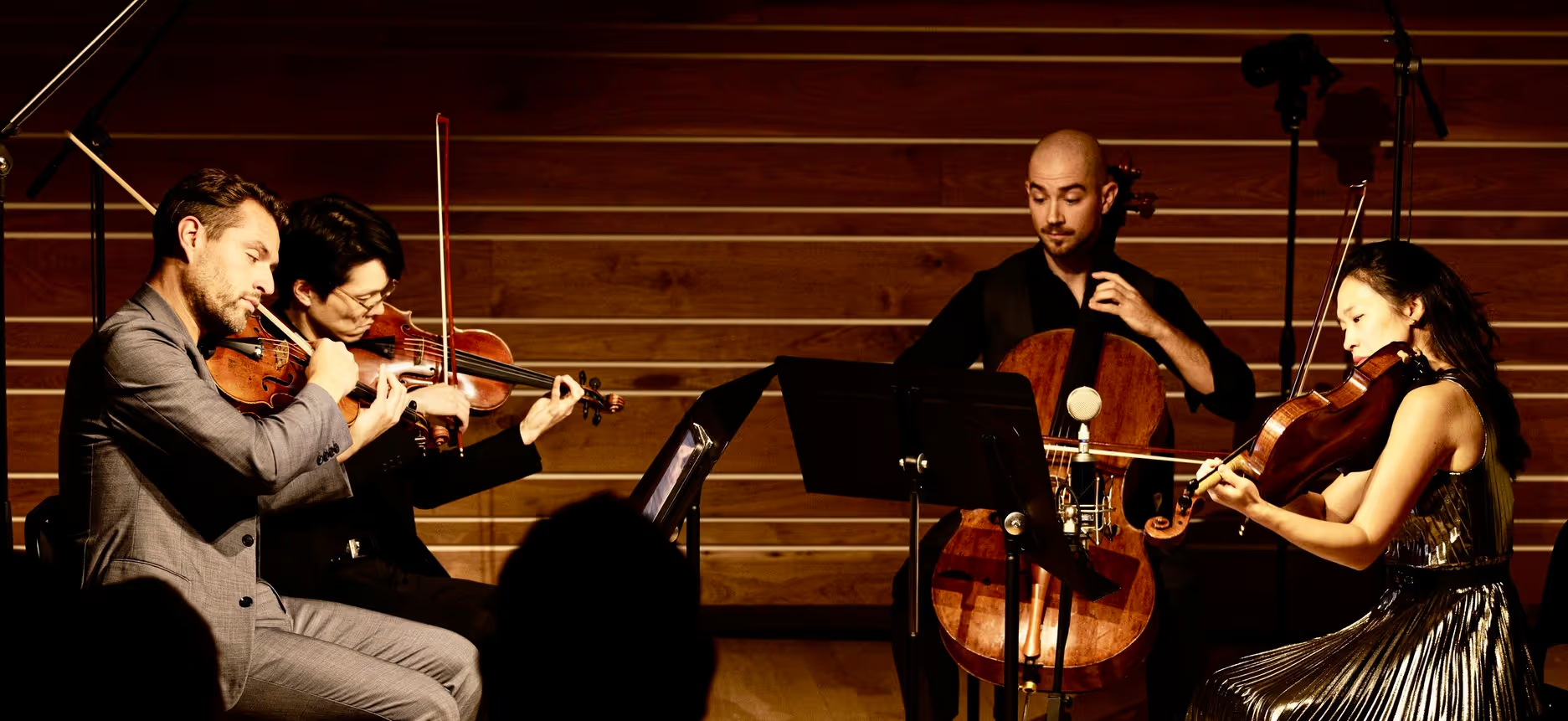
On October 23, 2024, the Dover Quartet opened Nova Linea Musica's inaugural season at Guarneri Hall in Chicago with a sold-out performance later broadcast on WFMT. The program featured works by Jessie Montgomery, Mason Bates, George Walker, and Dvořák.
Publish Date:
October 2, 2023
The Dover Quartet Launched Nova Linea Musica's First Season. Here Is What Happened.
By Michele Mohammadi, President and Executive Director, Nova Linea Musica
On October 23, 2024, Nova Linea Musica opened its inaugural season at Guarneri Hall with the Dover Quartet. It was the first concert NLM had ever presented. The program - Strum by Jessie Montgomery, From Amber Frozen by Mason Bates, the Molto adagio from George Walker's String Quartet No. 1, and Dvořák's American Quartet broadcast on WFMT. The evening was sold out.
Before the concert, cellist Camden Shaw addressed the audience in a pre-concert discussion moderated by Doyle Armbrust. Shaw called Montgomery's Strum "already iconic" and one of the most performed works in the contemporary string quartet repertoire. He described Walker's slow movement as "really beautiful and cathartic," noting that Walker had studied at the Curtis Institute of Music - where all four Dover Quartet members trained. "We are very proud because we all grew up there as a quartet," Shaw said. He closed by looking ahead to the Dvořák, noting that the American Quartet drew inspiration beyond Dvořák's Czech roots - shaped by the African American and Native American melodies he encountered while in Iowa. "This is a really cool program," Shaw said.
The Program
The evening opened with Jessie Montgomery's Strum - a piece Shaw had called "already iconic" in the pre-concert discussion, and one of the most performed works in the contemporary string quartet repertoire. Built on pizzicato and strumming, it blends classical technique with American folk idiom. Montgomery had just completed her residency as Mead Composer-in-Residence with the Chicago Symphony Orchestra. The piece landed immediately. The room was with it from the first notes.
Mason Bates's From Amber Frozen followed. Shaw had spoken about how unusual the piece was - how surprising it remained, even after the quartet had lived with it. Armbrust described its atomized rhythms and multi-dimensional layers with characteristic precision. The piece builds from almost nothing - plucked, detuned fragments - into something lyrical and fully alive, before dissolving back into its origins.
George Walker's Molto adagio, the second movement of his String Quartet No. 1, was the emotional center of the evening. Walker was the first Black composer to win the Pulitzer Prize in Music, which he received in 1996 for Lilacs. He wrote the quartet at 24, and studied at the Curtis Institute - the same institution where the Dover Quartet came of age. Shaw called the movement "really beautiful and cathartic," and in the room that night, it was more than a technical achievement. It carried weight.
The evening closed with Dvořák's American Quartet - all four movements, played in full. Composed in 1893, the piece drew on more than Dvořák's Czech heritage. As Shaw noted, Dvořák was deeply inspired by the African American and Native American melodies he encountered while in Iowa - traditions that left their mark on the work's melodic character and emotional texture. His friendship with Harry T. Burleigh deepened that influence further. The Dover Quartet brought the finale to a rousing close. The audience responded in kind.
What the Evening Meant
Third Coast Review called Nova Linea Musica "a gift to Chicago" after that first night. The review noted the visible connection among the Dover Quartet's members - the subtle exchanges, the way they interacted with their instruments as if they were extensions of their bodies. It noted the pre-concert discussion, the reception, the intimacy of the room.
That intimacy was the point. NLM was built on the conviction that the distance between composers, performers, and listeners is a problem worth solving - that music heard in a room where everyone is present to each other, before and after the performance, is a different experience than music heard from a distance. October 23, 2024 was the first test of that conviction. It held.
Photography: Eric Snoza

