World Premiere
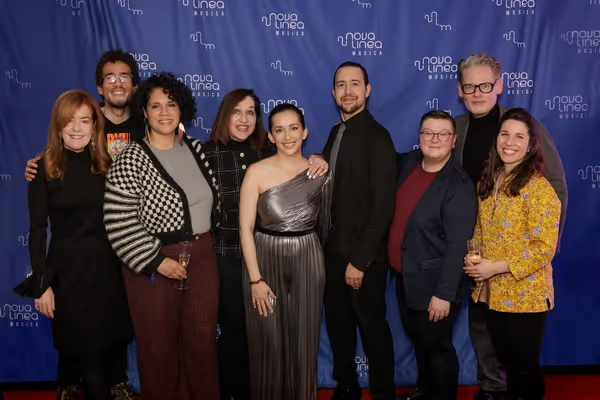
On December 3, 2025, the Catalyst Quartet performed two NLM-commissioned world premieres at Nova Linea Musica's Against All Odds concert in Chicago. Composer Andrea Casarrubios was in the room; Derrick Skye joined by satellite from Los Angeles. Jessie Montgomery and Stacy Garrop were among those listening.
Publish Date:
January 5, 2026
Two World Premieres, One Night: Andrea Casarrubios and Derrick Skye at Against All Odds
By Michele Mohammadi, President and Executive Director, Nova Linea Musica
On December 3, 2025, the Catalyst Quartet took the stage at Nova Linea Musica's Against All Odds with a program that spanned centuries and continents - from a 17th-century Mexican nun to contemporary voices from Iran, Cuba, and Los Angeles. At the center of the evening were two NLM-commissioned world premieres: unsaying by Andrea Casarrubios and Flare and Answer by Derrick Skye.
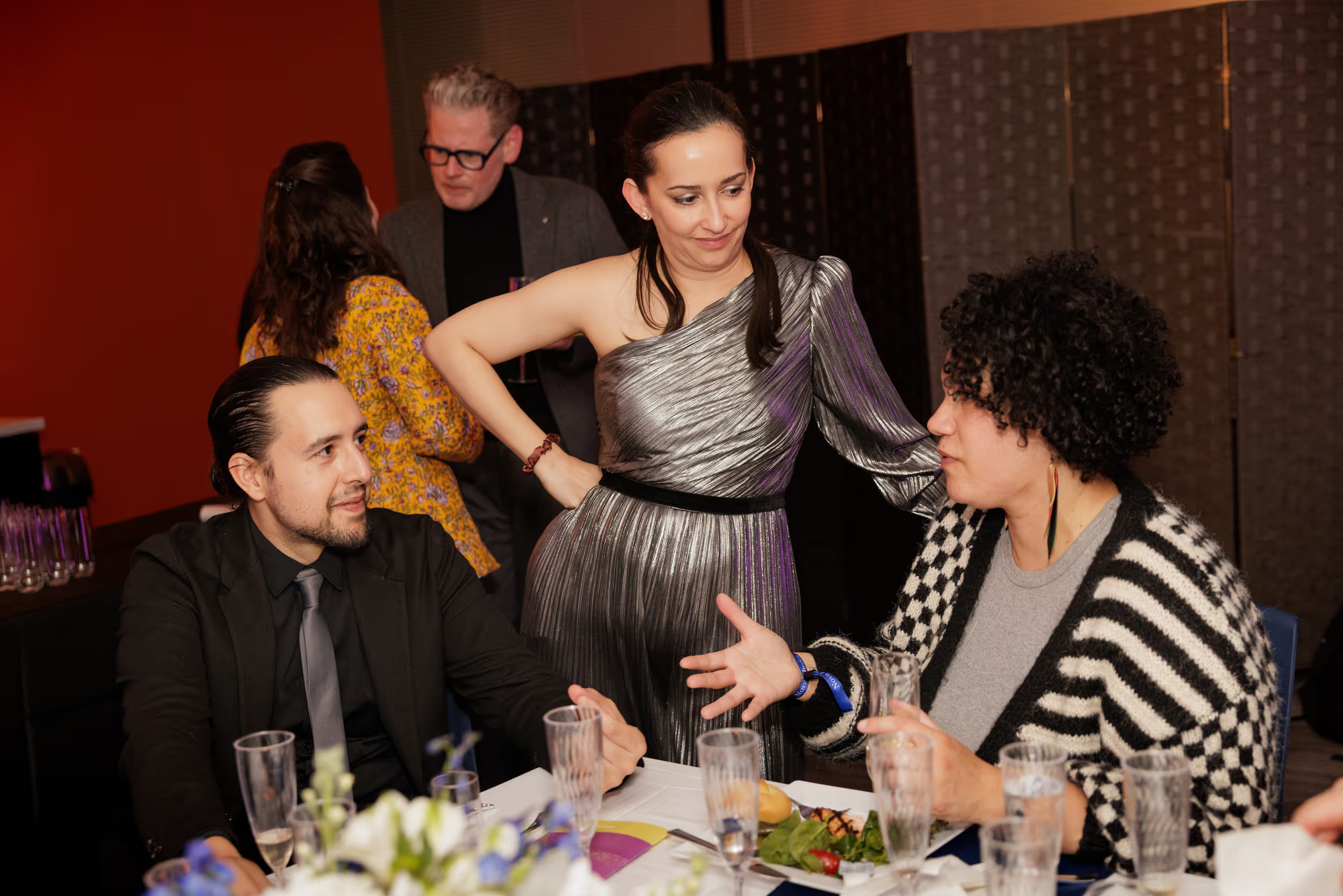
Both composers were present and spoke directly to the audience before their works were performed - Casarrubios in the room, Skye joining by satellite from Los Angeles. Also in the audience that night: Jessie Montgomery, whose work Build was performed on the same program, and Jorge Enrique Amado Molina, whose Tríptico Cubano anchored the first half. NLM Composer-in-Residence Stacy Garrop, Chicago composers Mischa Zupko and Marc Mellits, and Seth Boustead of Access Contemporary Music were there as well. It was, in the most literal sense, a room full of composers listening to each other's music - and to two new works hearing their first breath in Chicago.
Andrea Casarrubios: A Silence That Demands to Be Heard
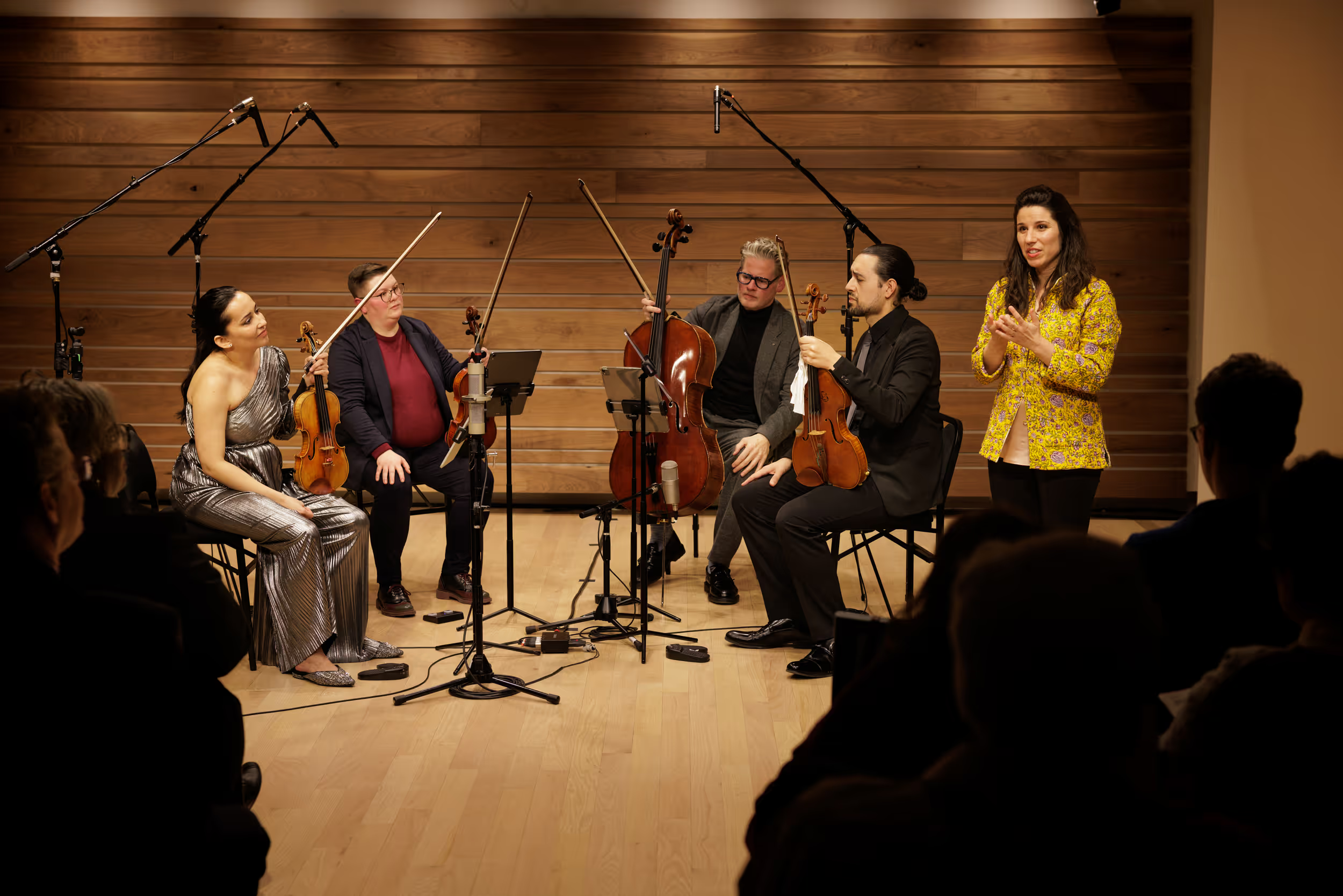
Before the Catalyst Quartet played unsaying, Casarrubios rose from the audience to speak about the work. Molina did the same before Tríptico Cubano. In a sixty-seat room, that kind of directness lands differently than a program note. The composers were not behind the music - they were in front of it, and then they sat down and listened alongside everyone else.
unsaying is a brief quartet that sits with silence - not comfortable silence, but the silence of words swallowed at the wrong moment. Casarrubios describes the work as exploring the paradox of silence: how it both soothes and suffocates, veils and reveals. At the piece's center lies a grand pause, charged with everything that remains unsaid. The Catalyst Quartet found the full weight of that moment.
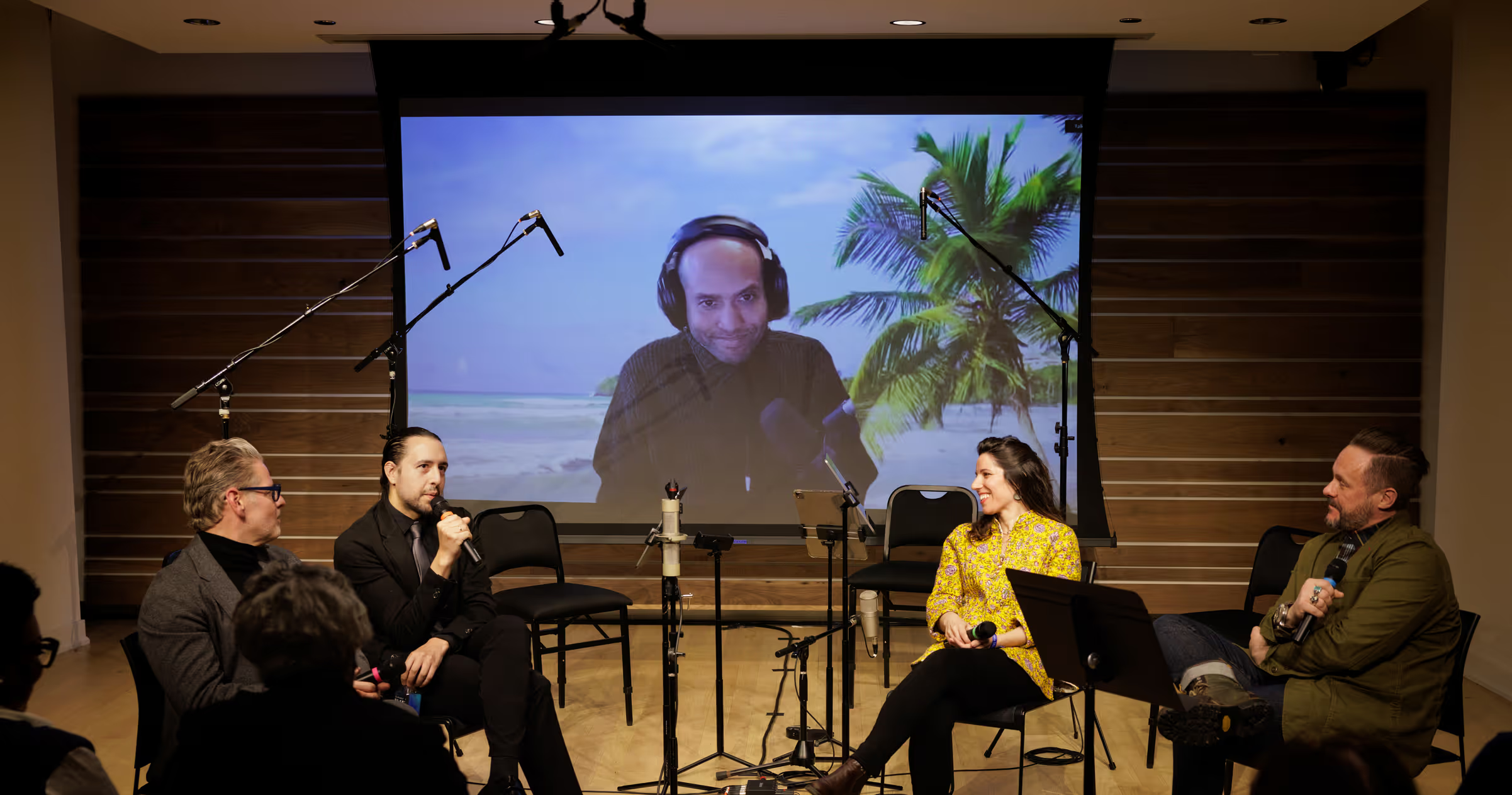
During the pre-concert discussion, moderated by Doyle Armbrust, Casarrubios spoke about the relationship between identity and composition: "I don't think that you can separate yourself from your identity yet, when it comes to music and writing music. I think that it just really depends on the piece." She went on to describe her process of imagining the performers before a single note is written - their physicality, their energy, their individual voices and how those voices interact. "The spark or the essence of anything that I will imagine at the beginning is them playing it," she said, "and then from there I try to distill the most essential or honest parts of whatever it is that I want to express or have them bring to you."
She also reflected on the challenge of writing short: "It was very challenging to write something this short, and I appreciate the challenge. It really makes you be very compact. There is just nothing that is extra - and if anything there could be more, but there is power in that as well."
Derrick Skye: A Flare That Demands an Answer
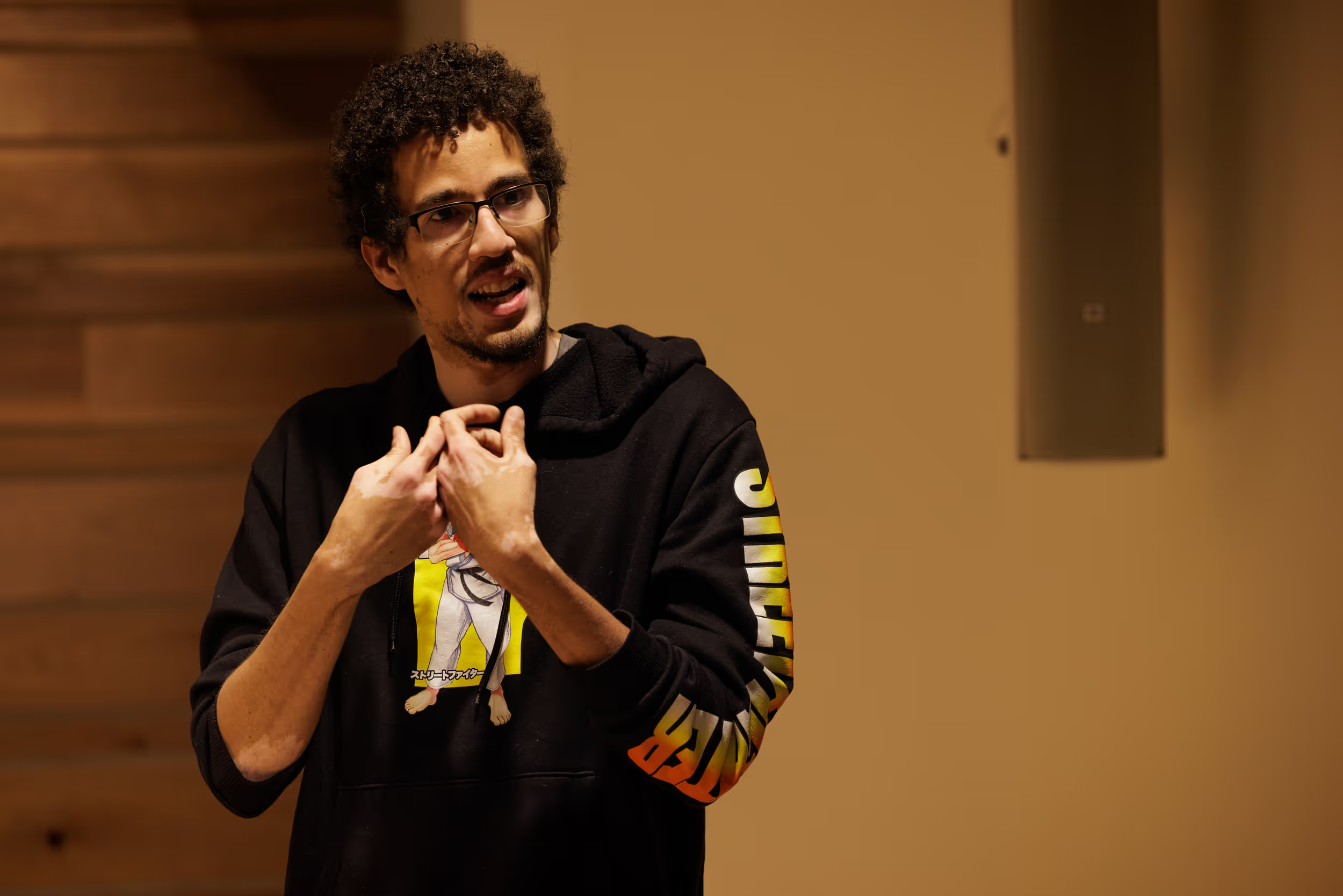
Flare and Answer arrived with a different kind of energy entirely. At just over two minutes, the piece compresses the trance traditions of Moroccan Gnawa music - specifically the voices of Khadija El Warzazia and B'net Houariyat - into a driving, urgent call and response. Skye drew on the blues scale filtered through the modal colors of maqam Rast, finding the resonances between North African and African American musical traditions. The piece invites the audience to participate: once the rhythmic section begins, listeners are encouraged to clap or tap along. They did. The room came alive.
Joining by satellite, Skye spoke candidly about his cross-cultural approach: "I generally try to mess with people's heads. My language tends to not be nailed down to one cultural practice, and then people get confused - and that is great." He traced the blues lineage at the heart of the work: "Blues is an American invention in terms of how those pitches are used, but the quality of that sound goes back to the African continent. In particular, the inspiration I am drawing from is North and West African - Moroccan Gnawa music." For Skye, the cross-cultural combination is not simply an aesthetic choice. "In music," he said, "we can make anything work."
The Room
What made the evening remarkable was not just the music but who was listening to it. A GRAMMY Award-winning composer was in the audience watching the Catalyst Quartet - an ensemble of which she was once a member - perform her own work. A Cuban composer living in Chicago heard his Tríptico Cubano alongside two world premieres. Chicago composers Mischa Zupko and Marc Mellits, and Seth Boustead of Access Contemporary Music were among those present, as was NLM Composer-in-Residence Stacy Garrop. The conversation between composers, performers, and listeners that NLM exists to create was happening in real time, across every part of the evening.
The pre-concert discussion was moderated by Doyle Armbrust. The evening closed with Coleridge-Taylor Perkinson's String Quartet No. 1, "Calvary" - a fitting final word on a night that took resilience as its theme.
Photography: Eric Snoza

